 Ultimate guide
How to Build Focus and Discipline Through Martial Arts
Last Updated: November 12, 2026
Quick Summary
Martial arts focus and discipline are built through structured practice that puts attention to immediate, physical use, since you cannot execute a technique while your mind is elsewhere. Structure does the heavy lifting: you show up at a set time, follow a routine, and repeat fundamentals until they become automatic, building discipline by design rather than willpower.
- Focus is holding attention on one task while ignoring distractions; discipline is doing that repeatedly, especially on days you don't feel like it.
- Martial arts for ADHD focus uses short, clear instructions, immediate feedback, and physical engagement, though it is not a treatment for ADHD.
- Pick a realistic weekly frequency, because two classes every week beats four for three weeks and then nothing.
- Set a measurable goal like attending two classes a week for eight weeks, and track attendance rather than outcomes.
- Return after a gap without guilt, and don't wait until you feel ready before starting.
Table of Contents
- How Martial Arts Builds Focus and Discipline Through Structured Practice
- Martial Arts for ADHD Focus: Why Structured Training Helps Attention
- How to Stay Consistent With Martial Arts Training
- Frequently Asked Questions
How Martial Arts Builds Focus and Discipline Through Structured Practice
Parents and adult beginners often ask one question most: can martial arts training make someone more focused? Martial arts for building focus and discipline works because structured practice puts attention to immediate, physical use.
Focus is holding attention on one task while ignoring distractions; discipline is doing that repeatedly, especially on days you don't feel like it. A class trains both at once, because you cannot execute a technique while your mind is elsewhere.
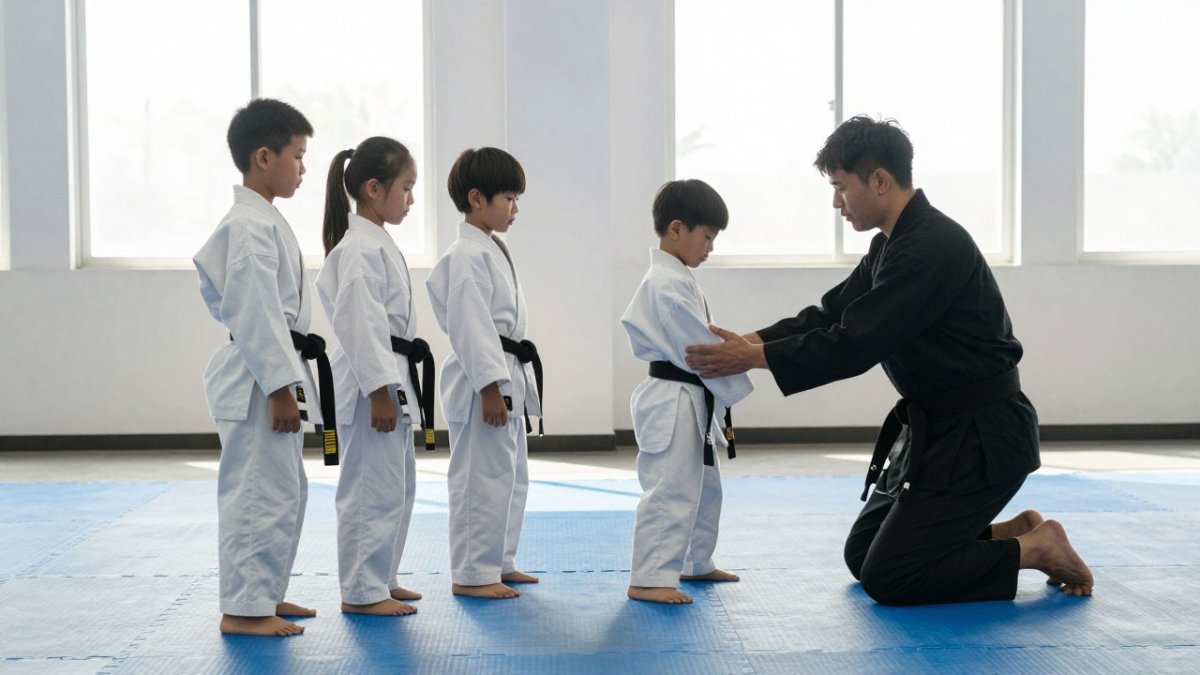
Beginners often treat the first weeks as a fitness phase and tune out during instruction.
The mental benefits of a martial arts focus in Brazilian Jiu Jitsu and Muay Thai compound over months, not days. Structure does the heavy lifting: you show up at a set time, follow a routine, and repeat fundamentals until they become automatic, discipline built by design rather than willpower.
Martial Arts for ADHD Focus: Why Structured Training Helps Attention
Martial arts for ADHD focus draws on the same principles: short, clear instructions, immediate feedback, and physical engagement that makes concentration easier to sustain than passive listening.
Martial arts is not a treatment for ADHD. What structured training can offer is a predictable environment where attention is practiced and self-control is reinforced by rules, respect, and routine.
How to Stay Consistent With Martial Arts Training
Consistency is where most beginners lose momentum, and it usually has nothing to do with motivation.
Pick a realistic weekly frequency, two classes every week beats four for three weeks and then nothing, and anchor training to a fixed day and time. Set a measurable goal like "attend two classes a week for eight weeks," track attendance rather than outcomes, and return after a gap without guilt.
If you are ready to put a routine in place, you can find beginner-friendly martial arts classes that fit a family schedule. Adults starting from scratch may want to read about how to start Muay Thai as an adult before their first session, and anyone weighing a longer commitment can check whether beginner Jiu Jitsu classes for adults are worth the investment.
Nervousness about your first class is common; this guide to your first Jiu Jitsu class walks through the format step by step.
A common mistake is waiting until you feel "ready."
Consistency comes from a few simple habits rather than motivation.
| Habit | What to do |
|---|---|
| Weekly frequency | Pick a realistic number; two classes weekly beats four for three weeks |
| Schedule | Anchor training to a fixed day and time |
| Goal | Set a measurable goal, like two classes a week for eight weeks |
| Tracking | Track attendance rather than outcomes |
| After a gap | Return without guilt |
| Common mistake | Waiting until you feel ready |
Focus and discipline are not traits you are born with. They are habits built through repetition, and a structured class gives you a place to build them with other people doing the same work. At Evolve Jiu Jitsu & Muay Thai, classes are led by Checkmat black belt Todd Aimer, with programs for kids from age four through adults, and your first class is free. Get started with Evolve Jiu Jitsu & Muay Thai and find out what a consistent training routine does for your attention and self-control.
Frequently Asked Questions
Does martial arts build discipline?
Yes. Martial arts builds discipline through repetition, clear rules, and a structured class routine. Students practice drills and forms until technique becomes automatic, follow instructions from an instructor, and set goals they work toward over weeks. That repeated cycle of effort and feedback trains self-control and patience. For kids and adults alike, the classroom-style environment reinforces respect and consistency, and those habits carry into school, work, and daily life.
Which martial art is best for building focus and discipline?
Any style taught in a structured environment can build focus and discipline, but the fit matters more than the name. Brazilian Jiu Jitsu and Muay Thai both rely on drills, repetition, and calm decision-making under pressure, which trains concentration and self-control. Karate and Taekwondo emphasize forms and respect for rules, which suits learners who thrive on clear structure. The instructor and class routine matter more than the style, so look for patient teaching and consistent training.
How long does it take to see improvements in focus and discipline through martial arts?
Changes in attention and self-control often take a few weeks to appear with consistent training, and clearer gains can take a few months. Progress depends on how often you attend, the quality of instruction, and your goals. Tracking simple markers, like staying calm during sparring or finishing drills without reminders, helps you measure growth. Consistency matters most: two or three classes a week builds habits faster than sporadic attendance.