 how-to
How to Start Muay Thai as an Adult: First Steps
Last Updated: November 4, 2026
Quick Summary
To start Muay Thai as an adult, book a beginner-friendly class and expect a coached session moving from warm-up to stance, basic strikes, and pad work. Train two to three classes per week at first, and use loaner gear before buying hand wraps and gloves.
- Adult beginners in their thirties, forties, and beyond join classes every week.
- A first class covers warm-up, stance and guard, basic strikes, pad work, and conditioning.
- Two to three classes per week is a common starting point for adult beginners.
- Buy hand wraps first, then 12-16 oz boxing gloves, shin guards, and a mouthguard.
- Sleep seven to nine hours and take at least one full rest day per week.
Table of Contents
- Why Adults Can Start Muay Thai at Any Age
- Your Muay Thai First Class: What to Expect Step by Step
- How to Choose a Gym and Coach Before You Commit
- Muay Thai Beginner Training Schedule: Building Your First Month
- Muay Thai Equipment for Beginners: What to Buy and What to Skip
- How to Learn Muay Thai at Home Between Classes
- Recovery and Injury Prevention for Adult Beginners
- Book Your Free First Class at Evolve Jiu Jitsu & Muay Thai
- Frequently Asked Questions
Why Adults Can Start Muay Thai at Any Age
You are not too old to start Muay Thai. Adult beginners walk into gyms across the country every week, many of them in their thirties, forties, and beyond, and most discover the same thing: the hardest part was the drive over.
This guide covers exactly how to start Muay Thai as an adult, from your first class to your first month of training. Beginners are often surprised to find the fear is bigger than the reality.
Muay Thai is a striking martial art from Thailand that uses punches, kicks, knees, and elbows.
Consistency tends to matter more than age when it comes to progress.
The sport meets you where you are. Coaches adjust drills, pad work, and conditioning to the person in front of them.
Your Muay Thai First Class: What to Expect Step by Step
A Muay Thai first class is a structured, coached session that moves from warm-up to stance and strikes to pad work, usually ending with conditioning. You will sweat, you will learn something, and you will not be thrown into a fight.
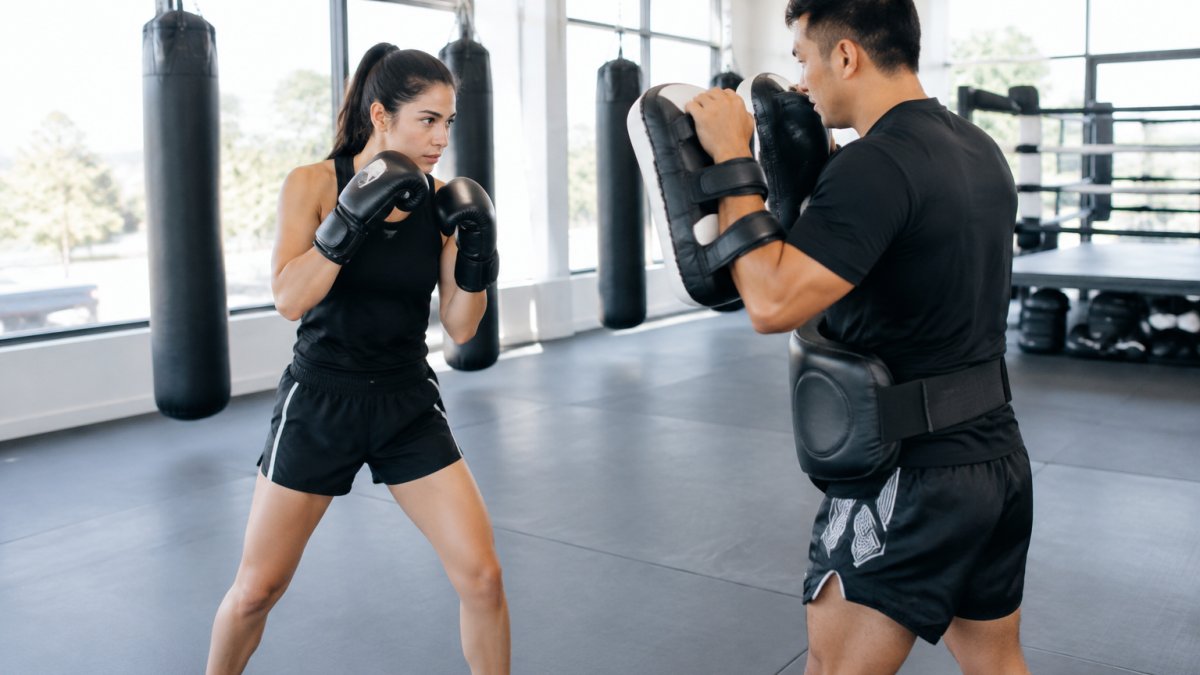
Here is the honest walkthrough, so nothing surprises you.
Warm-Up, Stance, and Your First Strikes
Class typically starts with a warm-up.
Muay Thai classes generally begin with stance and guard, followed by basic strikes such as the jab and cross.
Pad Work, Partner Drills, and Rounds
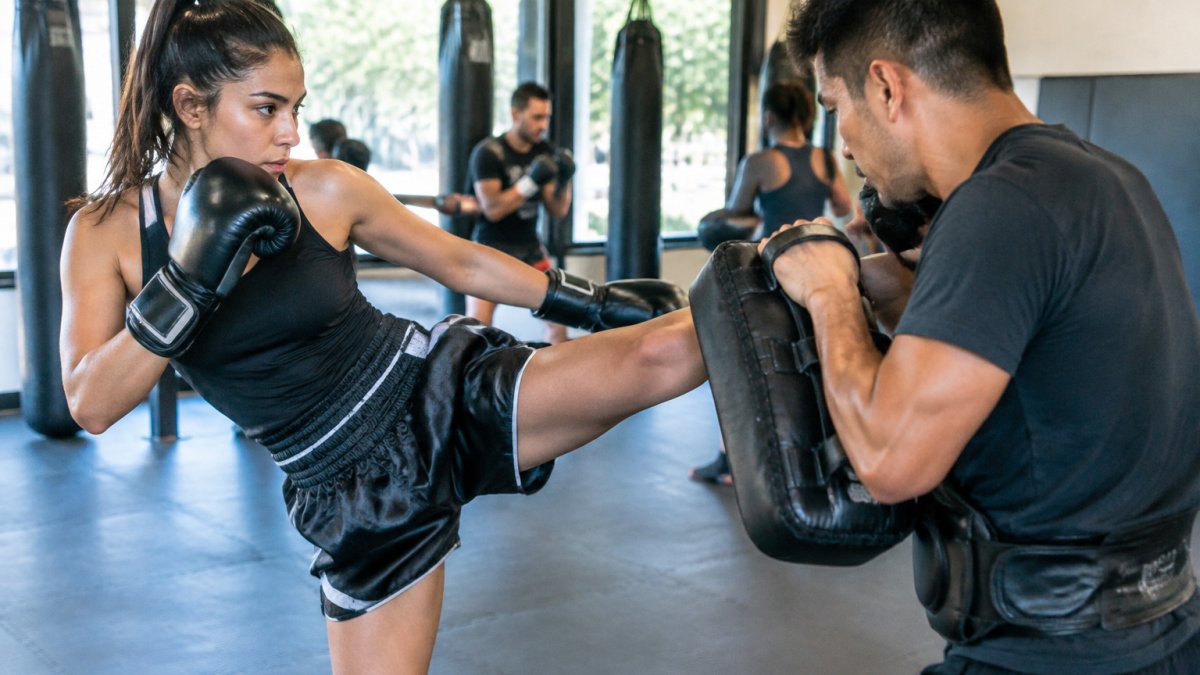
Pad work is a common part of Muay Thai training, where a partner holds pads while you practice strikes. Partner drills and timed rounds are also typical in the sport.
A common mistake is going too hard in class one. Pace yourself. Nobody expects you to keep up with the regulars on day one.
If nerves are the issue, read our full walkthrough of what to expect in your first jiu jitsu class, which follows the same beginner-friendly rhythm.
How to Choose a Gym and Coach Before You Commit
Choosing the right gym can shape your start, so it helps to ask a few questions before you sign up. That is a mistake. A good beginner program has a clear onboarding path, a coach who can explain why a drill matters, and a culture where new people are not treated as sparring fodder.
Use this checklist before you sign anything, and pay attention to what the answers actually tell you:
-
Watch a beginner class, not just an advanced one. You want to see how the coach handles people who are still learning the stance.
-
Check class times against your real schedule, including commute and recovery time.
-
Meet the head coach and ask about their background, who they trained under, and how long they have taught beginners.
-
Notice whether students seem friendly to newcomers and whether the coach introduces new people by name.
The coach matters more than the building. A patient coach who explains the "why" behind each drill will get you further than fancy equipment. During your visit, ask one direct question: "How do you handle a complete beginner in their first month?" A strong answer includes a structured intro, separate or modified drills, no sparring, and a clear progression. A vague answer like "they just jump in" is a warning sign.
Watch out: a gym that pushes a long contract before you have taken a class, or that cannot tell you what a beginner's first month looks like, deserves a closer look. Ask about first-aid training and insurance coverage as part of your visit.
If you are comparing a Muay Thai gym to a general martial arts school, it can help to ask how much of the curriculum is dedicated to Muay Thai striking.
Muay Thai Beginner Training Schedule: Building Your First Month
Two to three classes per week is a common starting point for adult beginners. That gives you enough repetition to build muscle memory without wrecking your recovery. The mistake most adults make is signing up for five classes in week one, getting sore, and quitting by week three.
Here is a practical first-month plan that accounts for recovery and real-life schedules:
| Week | Classes | Focus | Skill Goal | Recovery Note |
|---|---|---|---|---|
| Week 1 | 2 | Stance, guard, jab, cross | Get comfortable in the room and learn the basic stance | Expect soreness in calves and shoulders; take a full rest day between classes |
| Week 2 | 2-3 | Footwork, basic kicks | Move without thinking and throw a basic roundhouse with balance | Keep one day completely off; stretch hips and calves daily |
| Week 3 | 3 | Combinations, pad work | Link two to three strikes smoothly | If shins are bruised, reduce kicking volume and ice after class |
| Week 4 | 3 | Defense, light partner drills | Stay calm under pressure and block without flinching | Sleep 7-9 hours; drop to 2 classes if fatigue accumulates |
Keep a simple training log. Note what felt good, what felt awkward, and what you want to ask your coach next time. A log also helps you spot patterns, like whether your shoulders are sore because of poor guard posture or because you increased volume too fast.
Progress in Muay Thai is not linear. Some weeks you feel sharp, others sluggish, which is common for beginners. If you are still struggling with the warm-up, that is not a sign you are too old; it is a sign you need more recovery or a modified warm-up.
Watch out: sharp pain, joint swelling, or pain that persists beyond two days is not normal soreness. Stop, tell your coach, and consider seeing a doctor before returning to class. Bruising on the shins from kicking is common and usually fades as your shins adapt, but deep bruising or numbness is a reason to back off.
If your schedule only allows two classes per week, add one 15-minute home shadowboxing session on a non-class day. That keeps the movement pattern fresh without adding impact. If you travel or miss a week, do not try to make up the classes; resume at the same frequency and let your body catch up.
Muay Thai Equipment for Beginners: What to Buy and What to Skip
You need very little to start. Most gyms, including ours, offer loaner gear for your first classes, so wait before spending.
Buy in this order:
- Hand wraps. Cheap, essential, protect your knuckles and wrists.
- Boxing gloves. 12-16 oz for training. Ask your coach for sizing.
- Shin guards. Needed once you start kicking pads regularly.
- Mouthguard. Required before any sparring.
Skip for now: custom shorts, fancy rash guards, and premium gloves. Upgrade when you know you are sticking with it.
Watch out: cheap gloves with thin padding can leave your hands sore after pad work. Spend a little more on gloves than on anything else.
How to Learn Muay Thai at Home Between Classes
Home practice speeds up your progress. Keep it short, simple, and focused on the basics.
- Shadowbox for 10 minutes, three times a week
- Practice your stance and footwork in a mirror
- Drill the jab-cross combination slowly, then faster
- Work on balance by standing on one leg
- Stretch hips, shoulders, and calves daily
- Watch technique videos and take notes for class
No equipment is required for shadowboxing, and it is the single best home drill. Focus on form, not power.
Recovery and Injury Prevention for Adult Beginners
Recovery is training. Adults need more of it than teenagers, and skipping it is the fastest way to get hurt.
- Sleep seven to nine hours
- Drink water before, during, and after class
- Warm up properly, every session
- Ice sore joints after hard training
- Take at least one full rest day per week
- Tell your coach about old injuries before class
Watch out: bruising on the shins is common in the first weeks of kicking. It fades as your shins adapt. Sharp pain is different, so stop and tell your coach.
Adult beginners who pace themselves and recover well tend to stay in the sport far longer than those who rush.
Book Your Free First Class at Evolve Jiu Jitsu & Muay Thai
The best way to start Muay Thai is to stop researching and step onto the mat. Beginner-friendly classes at Evolve Jiu Jitsu & Muay Thai are led by Checkmat black belt Todd Aimer, and your first class is free.
Our program welcomes adults of many ages and fitness levels, with an emphasis on learning the fundamentals. You can book your free first class and see the gym for yourself before committing to anything.
Wondering whether beginner classes are actually worth it for adults? Read whether beginner jiu jitsu classes for adults are worth it for an honest answer.
Get started with Evolve Jiu Jitsu & Muay Thai and learn Muay Thai the right way, from your very first class.
Frequently Asked Questions
Is 40 too old to start Muay Thai?
No. Adults in their 30s, 40s, and beyond start Muay Thai every week, and beginner classes are built around people with no experience. Your coach should adjust warm-ups, rounds, and conditioning to your fitness level, and you can scale intensity as you build strength and endurance. The main adjustment is recovery: plan rest days between sessions, warm up thoroughly, and tell your coach about any old injuries before your first class so drills can be modified.
How often should a beginner train Muay Thai?
Two to three classes per week is a sustainable starting point for most adult beginners. That gives you enough repetition to learn stance, guard, footwork, and basic combinations without overwhelming your joints and muscles. A beginner training schedule can often flex around work travel and family commitments. Add a fourth session only after a month or two, once recovery feels easy.
What equipment do I need for my first Muay Thai class?
Start with athletic shorts, a t-shirt, and a water bottle. You can ask about loaner gear before your first class so you can try training before buying gear. When you are ready, the essentials are 12-16 oz boxing gloves, hand wraps, shin guards, and a mouthguard. Muay Thai equipment for beginners does not need to be expensive; fit matters more than brand, and your coach can recommend sizes.
Can I learn Muay Thai at home as a beginner?
You can build a useful base at home with shadowboxing, footwork drills, and conditioning, but you cannot learn defense, pad work, or partner drills alone. Use home practice to reinforce what your coach teaches: 10-15 minutes of shadowboxing, stance and guard checks in a mirror, and basic cardio. Learning how to learn Muay Thai at home works best as a supplement to class, not a replacement, because feedback on technique is what prevents bad habits.