 how-to
How to Know What to Expect in Your First Jiu Jitsu Class
Last Updated: November 2, 2026
Quick Summary
A typical jiu jitsu class follows a structured timeline: arrival and check-in, changing and mat prep, a warm-up, the technique of the day, drilling with a partner, optional live sparring, and a wrap-up. Beginners often sit out sparring or drill instead, and you won't be expected to know anything. Just show up ready to learn.
- A typical jiu-jitsu class runs 60 to 90 minutes, with beginner classes usually closer to one hour.
- Wear a fitted athletic shirt and shorts or leggings with no zippers or loose pockets.
- Trim your nails, remove all jewelry, and shower before class as basic mat etiquette.
- Beginners should show up two or three classes a week rather than one intense session.
- Mild soreness in the forearms, neck, and hips is normal after a first class.
Table of Contents
- What Happens During a Typical First Jiu Jitsu Class
- How to Prep for Your First BJJ Class Before You Walk In
- What to Wear to a BJJ Class (and What to Bring)
- How Long Is a Typical Jiu-Jitsu Class?
- Is Jiu-Jitsu Hard for Beginners?
- Book Your Free First Class at Evolve Jiu Jitsu & Muay Thai
- Frequently Asked Questions
What Happens During a Typical First Jiu Jitsu Class
Walking into your first jiu jitsu class, you'll find a structured session built around warm-ups, technique instruction, drilling with a partner, and controlled sparring.
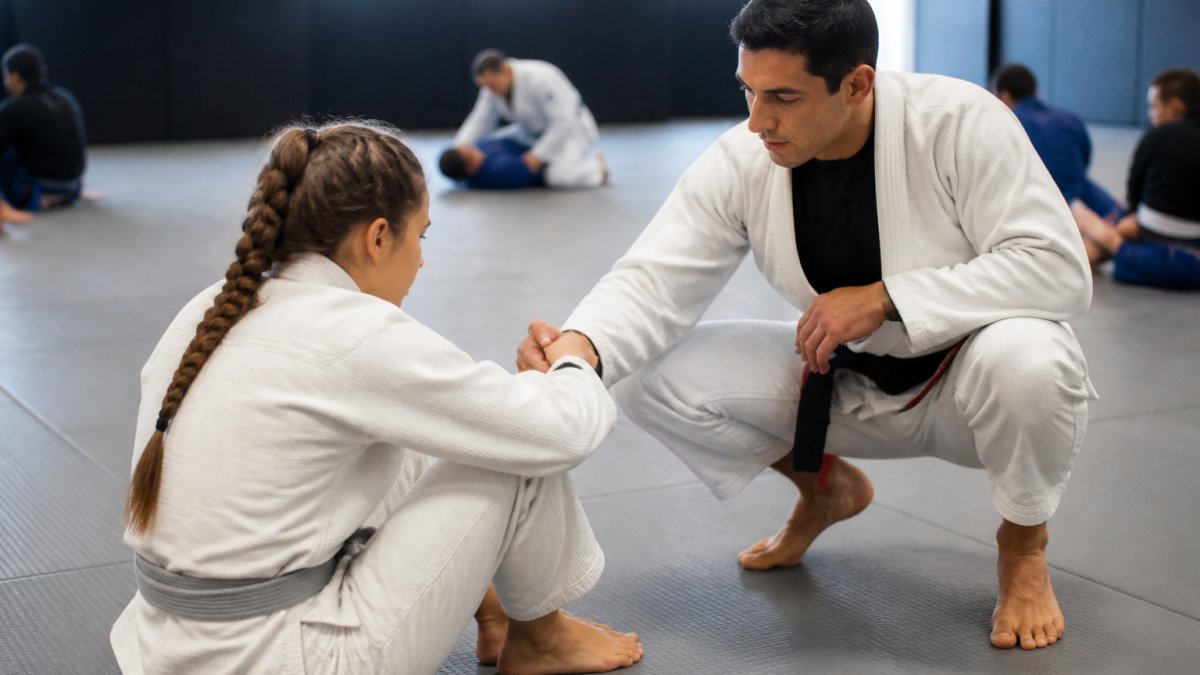
Here's what most new students discover. The class moves at a pace you can follow. Nobody throws you into the deep end. The instructor explains each movement, then you practice it slowly with a partner.
Your First-Class Timeline, From Arrival to Wrap-Up
A clear picture of the hour removes most of the anxiety. Here is how a typical first visit unfolds:
- Arrival and check-in. Arrive a little early to check in and meet the front desk.
- Changing and mat prep. Change into your gear, remove jewelry, and trim your nails before stepping on the mat.
- Warm-up. Light movement to raise your heart rate and loosen joints.
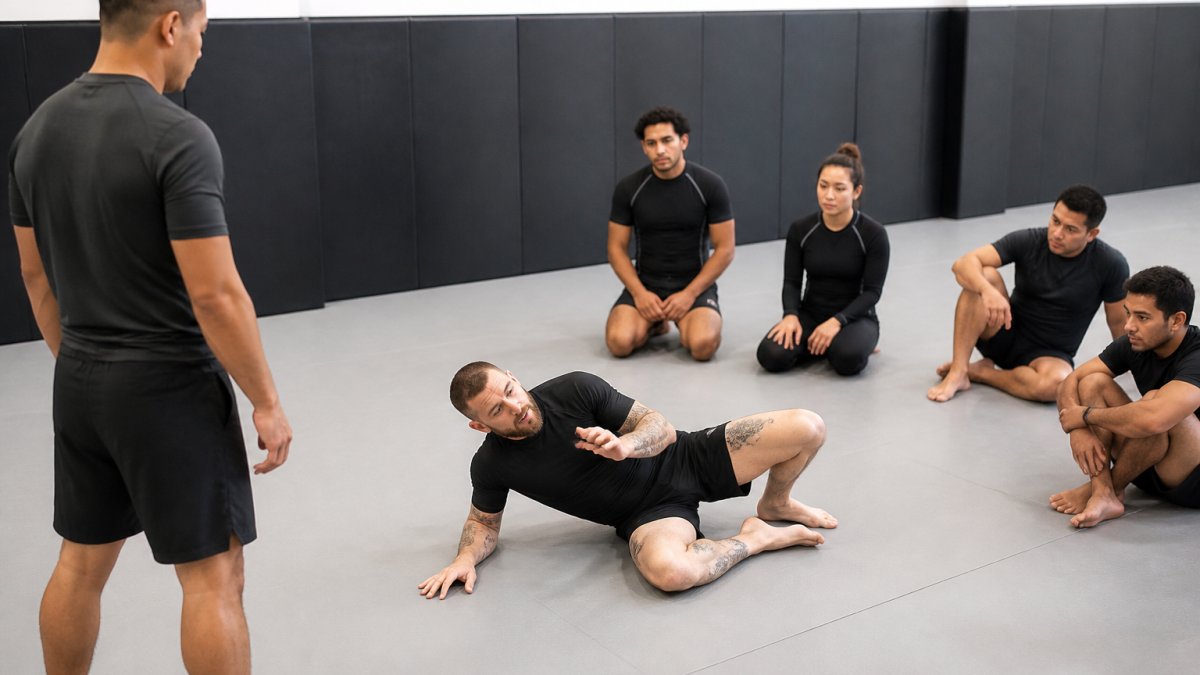
- Technique of the day. The instructor demonstrates one or two core movements.
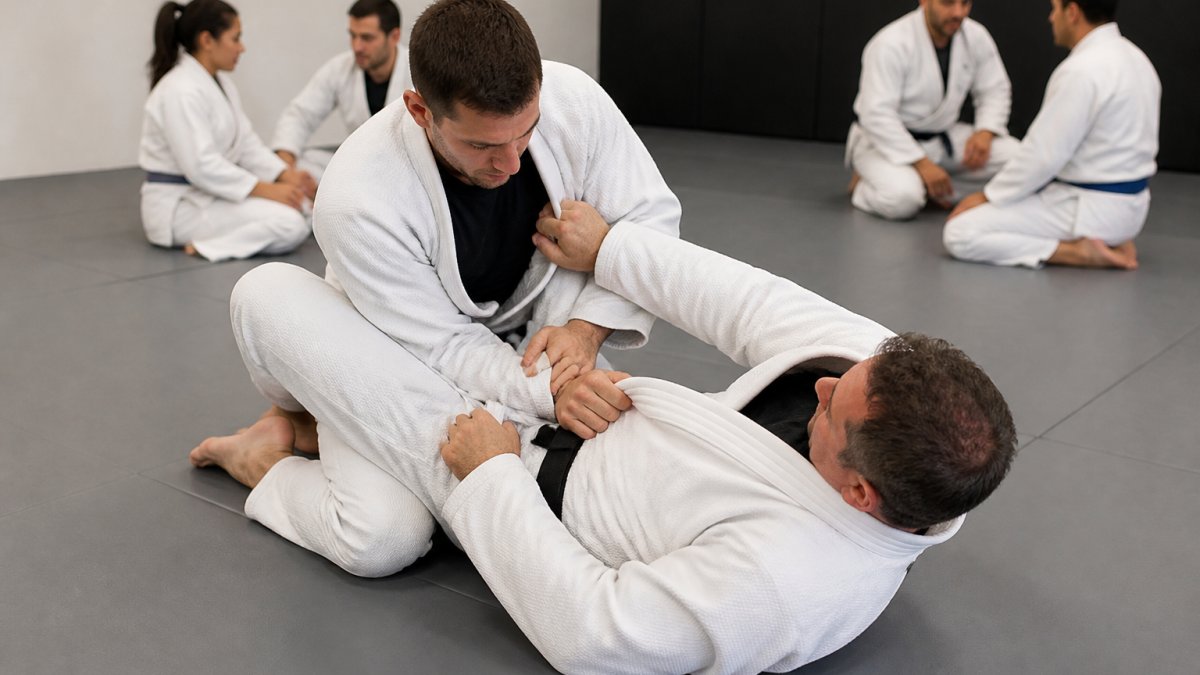
- Drilling. You practice the technique with a training partner at a slow, controlled pace.
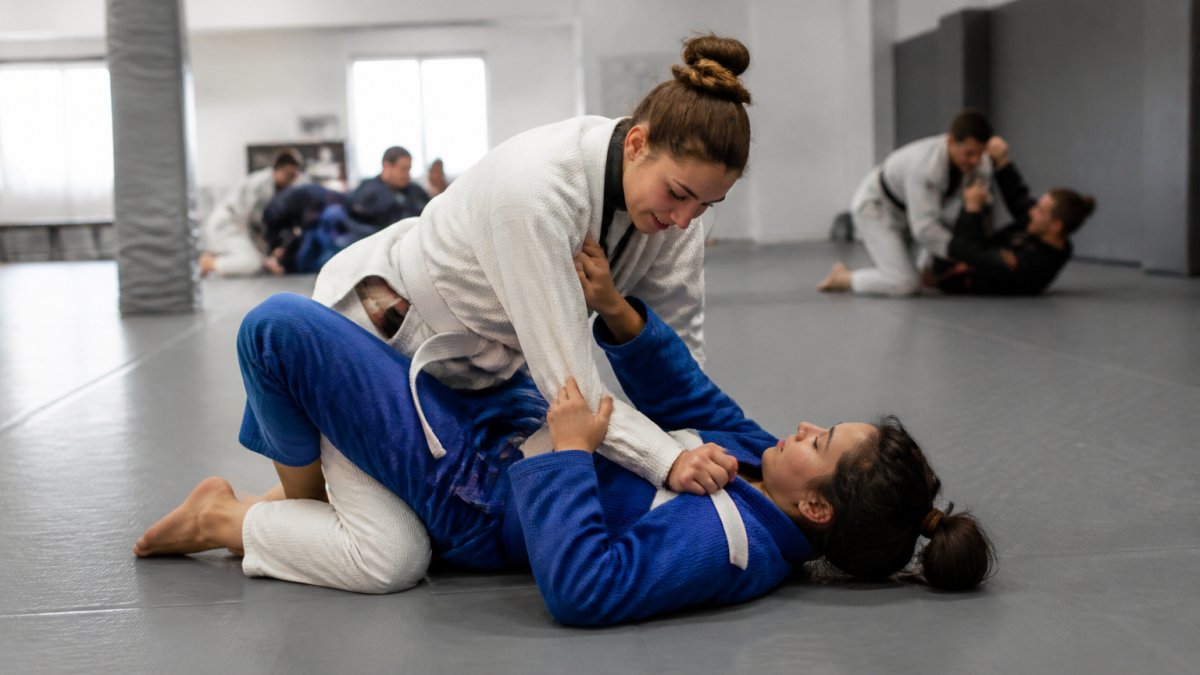
- Live sparring or rolling. Beginners often sit this out or drill instead.
- Wrap-up. Cool-down, questions, and a chance to talk with the instructor.
You won't be expected to know anything. Just show up ready to learn.
Here is how a typical first visit unfolds, from arrival to wrap-up.
| Step | What happens |
|---|---|
| Arrival and check-in | Arrive early to check in and meet the front desk |
| Changing and mat prep | Change gear, remove jewelry, trim nails |
| Warm-up | Light movement to raise heart rate and loosen joints |
| Technique of the day | Instructor demonstrates one or two core movements |
| Drilling | Practice the technique with a partner at slow pace |
| Live sparring or rolling | Beginners often sit this out or drill instead |
| Wrap-up | Cool-down, questions, and a chance to talk with the instructor |
How to Prep for Your First BJJ Class Before You Walk In
Preparation for your first BJJ class starts the day before you go. A little planning makes the experience smoother and less stressful.
First, call or email the gym. Ask what to bring, what to wear, and whether beginners need anything special. A good school will walk you through it.
Next, handle the small stuff:
- Trim your fingernails and toenails. Short nails protect your training partners from scratches.
- Remove all jewelry. Rings, earrings, and necklaces can catch on clothing or injure someone.
- Shower before class. Clean gear and a clean body are basic mat etiquette.
- Drink water beforehand. Hydration helps you focus and reduces cramping.
- Eat something light an hour before. A full stomach and rolling don't mix.
One common mistake is overthinking it. You don't need to be in shape first. You don't need to memorize moves from videos. Beginners start from scratch, and that's expected. If you're coming from another gym or returning after a break, tell the instructor so they can pair you appropriately.
What to Wear to a BJJ Class (and What to Bring)
For your first BJJ class, wear a fitted athletic shirt and shorts or leggings with no zippers or loose pockets. Ask ahead whether a uniform can be loaned to you before your first visit.
Comfort matters more than style. Loose clothing gets grabbed, and anything with metal can scratch a partner. Stick to snug athletic wear that moves with you.
What to bring:
- Water bottle. You'll want it between drills.
- Flip-flops. For walking off the mat to the bathroom or water fountain.
- A small towel. Mat sessions work up a sweat.
- A change of clothes. You'll feel better driving home clean.
Gi or No-Gi: How to Choose for Your First Visit
Choose gi if you want to learn grips and control through fabric, which builds a strong technical base. Choose no-gi if you prefer faster movement and a rash guard with shorts.
If you have no uniform at all, call ahead. Ask the gym whether it keeps loaner gis. Our free first class lets you try the format before committing to either path. You can read more about whether beginner classes are worth it if you're still weighing the decision.
How Long Is a Typical Jiu-Jitsu Class?
A typical jiu-jitsu class runs 60 to 90 minutes, with beginner classes usually closer to the one-hour mark. The time splits across warm-up, instruction, drilling, and sparring, and the exact mix varies by school and by format.
Longer classes aren't automatically better. A focused 60-minute session with clear instruction beats a two-hour class where you stand around. Beginners should look for schools that keep the first class short and manageable.
Ask about class length when you call. Some gyms separate beginner and advanced sessions, which keeps the pace right for new students.
What to Do After Class: A First-Day Checklist
The hour after class matters as much as the hour during it.
Shower after class. Mat contact means skin contact, so a shower with soap after training is good practice for you and your training partners.
Handle soreness early. Mild soreness in the forearms, neck, and hips is normal after a first class, those are the areas beginners use most.
Note what you want to work on. Write down one position or movement that felt confusing.
Hang damp gear to dry when you get home rather than leaving it in a closed bag.
Is Jiu-Jitsu Hard for Beginners?
Jiu-jitsu is challenging at first, but it is learnable by almost anyone who shows up consistently. The difficulty comes from unfamiliar movements, not from a fitness barrier.
Many beginners feel confused in the first few weeks. That's normal. Your body is learning to move in ways it never has.
The mental side matters as much as the physical, and nervousness often fades once you realize others on the mat started where you did.
Is jiu-jitsu good for self-defense? It's one of the most practical systems for controlling a situation on the ground, and you can explore the honest case for BJJ as self-defense before you commit.
A few things that keep beginners progressing:
- Show up on a schedule. Two or three classes a week beats one intense session.
- Tap early. Tapping is a safety tool, not a loss.
- Ask questions. Instructors expect them from beginners.
- **** Over time you'll recognize more positions, such as guard, mount, and side control.
- Communicate limits. Tell your instructor about injuries, disabilities, or anxiety so they can modify drills.
Safety comes first. Trimmed nails, clean gear, and respect for training partners keep the mat a place where everyone can learn.
Book Your Free First Class at Evolve Jiu Jitsu & Muay Thai
The hardest part of jiu-jitsu is often walking through the door the first time.
At Evolve Jiu Jitsu & Muay Thai, our classes are led by Checkmat black belt Todd Aimer, and we welcome complete beginners from age four through adulthood. Your first class is free, so you can try the pace before deciding anything. We offer training for all ages, from age four through adulthood.
Get started with Evolve Jiu Jitsu & Muay Thai and book your free trial class today.
Frequently Asked Questions
Do beginners spar during their first jiu jitsu class?
Most gyms do not put brand-new students into live rolling on day one. A typical first class focuses on the warm-up, the technique of the day, and drilling with a partner. If the class ends with live sparring, you can sit it out or ask to drill the technique again instead. You can ask to sit out live rolling and drill the technique instead.
What should I bring to my first day of BJJ?
Bring water, a small towel, flip-flops for the walk from the changing area to the mat, and a change of clothes for the ride home. Trim your fingernails and toenails beforehand, and leave jewelry at home for safety. If you own a gi, bring it; if not, a rash guard or athletic shirt with shorts works for a no-gi class. Call ahead to confirm what to wear.
Is Jiu-Jitsu hard for beginners?
The movements feel unfamiliar at first, and that is normal. Beginners spend early classes learning hip escapes, forward rolls, and basic positions like guard, mount, and side control. Coordination tends to improve with consistent training. The mental side matters as much as fitness. A good instructor breaks techniques into steps and pairs you with a training partner who can guide you.
How should I prepare for my first BJJ class?
Arrive a little early to check in and change. Tell them about any injuries, fitness limits, or anxiety so they can pair you well and offer modifications. Stay hydrated, eat a light meal an hour or two before class, and wear athletic clothing you can move in. Learning a few class etiquette basics can help you settle in faster.