 ultimate-guide
Are Beginner Jiu Jitsu Classes for Adults Worth It?
Last Updated: October 28, 2026
Quick Summary
Beginner jiu jitsu classes for adults are worth it because they teach core concepts like positional control, frames and escapes in a supportive environment, and your first class at Evolve Jiu Jitsu & Muay Thai is free. Most adult beginners progress steadily training two to three classes per week.
- Beginners generally start in the gi because grips slow the pace and make positions easier to feel.
- Training two to three classes per week gives most adult beginners steady skill growth and good recovery.
- Wear fitted athletic clothing, shorts without pockets and a snug t-shirt, to your first class.
- Tap early and tap often, since most BJJ injuries come from ego rather than technique.
- Avoid live sparring until the coach says you are ready.
Table of Contents
- Why Adult Beginner Jiu Jitsu Classes Are Booming
- Fundamental Positions and Core Concepts You Will Learn
- What to Expect at Your First BJJ Class
- What to Wear to Jiu-Jitsu: Gi, No-Gi, and Everything Between
- How Often to Train Jiu-Jitsu as a Beginner
- Beginner Jiu Jitsu Class Cost and Trial Options
- How to Choose a Beginner-Friendly Academy
- Safety, Etiquette, and Staying Injury-Free
- Fitness, Confidence, and Self-Defense Benefits for Adults
- Book Your Free Trial Class at Evolve Jiu Jitsu & Muay Thai
- Frequently Asked Questions
Why Adult Beginner Jiu Jitsu Classes Are Booming
Brazilian Jiu-Jitsu is a grappling martial art. At Evolve Jiu Jitsu & Muay Thai, adults can learn in a supportive environment, including those who are new to training. The International Brazilian Jiu-Jitsu Federation maintains the sport's competitive standards, which gives beginners a clear picture of the skill path ahead.
What Brazilian Jiu-Jitsu Actually Is
Brazilian Jiu-Jitsu is a martial art. Training details and contact can vary by class.
Fundamental Positions and Core Concepts You Will Learn
The core concepts that matter most early on:
- Positional control: where your hips and grips sit relative to your partner
- Frames and levers: using skeletal structure instead of muscle
- Base and balance: staying stable while someone tries to move you
- Escapes first: getting safe before getting offensive
What to Expect at Your First BJJ Class
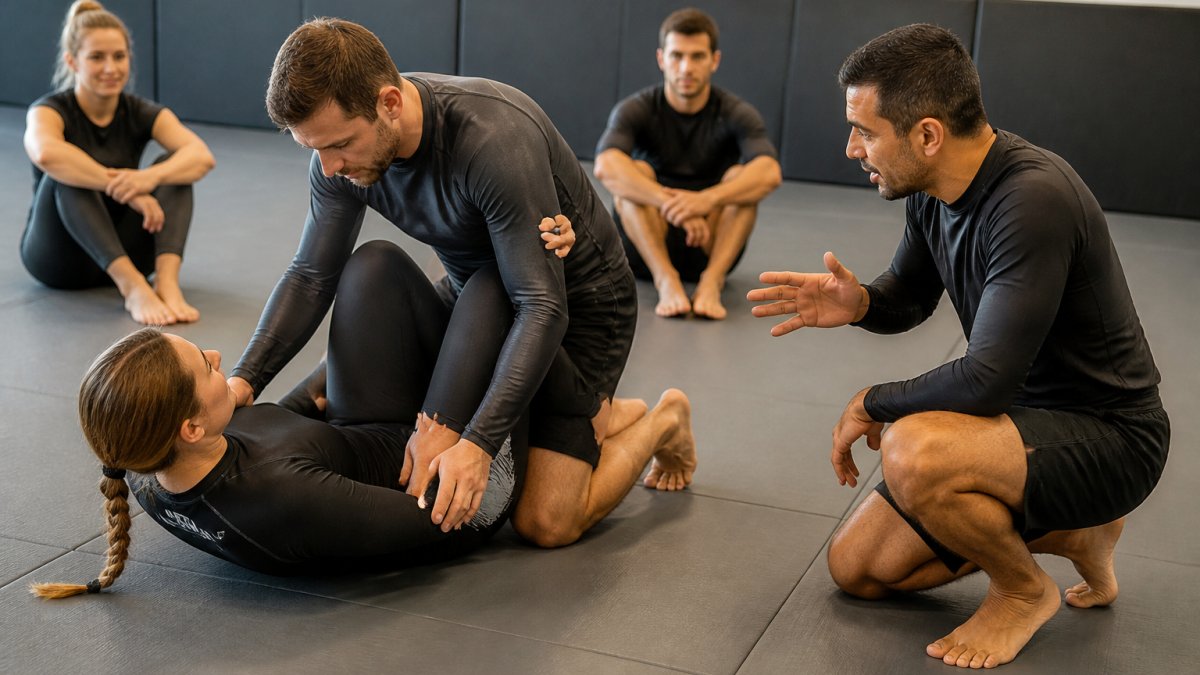
A common pattern is that the coach pairs first-timers with a more experienced student who is instructed to guide rather than overwhelm. You will likely be shown one or two techniques, practice them slowly, then try them against light resistance. If a drill feels confusing, the correct move is to ask your partner to slow down, experienced training partners expect this and it is not a sign of weakness.
A Practical First-Class Checklist
- Ask about the free trial
What to Wear to Jiu-Jitsu: Gi, No-Gi, and Everything Between
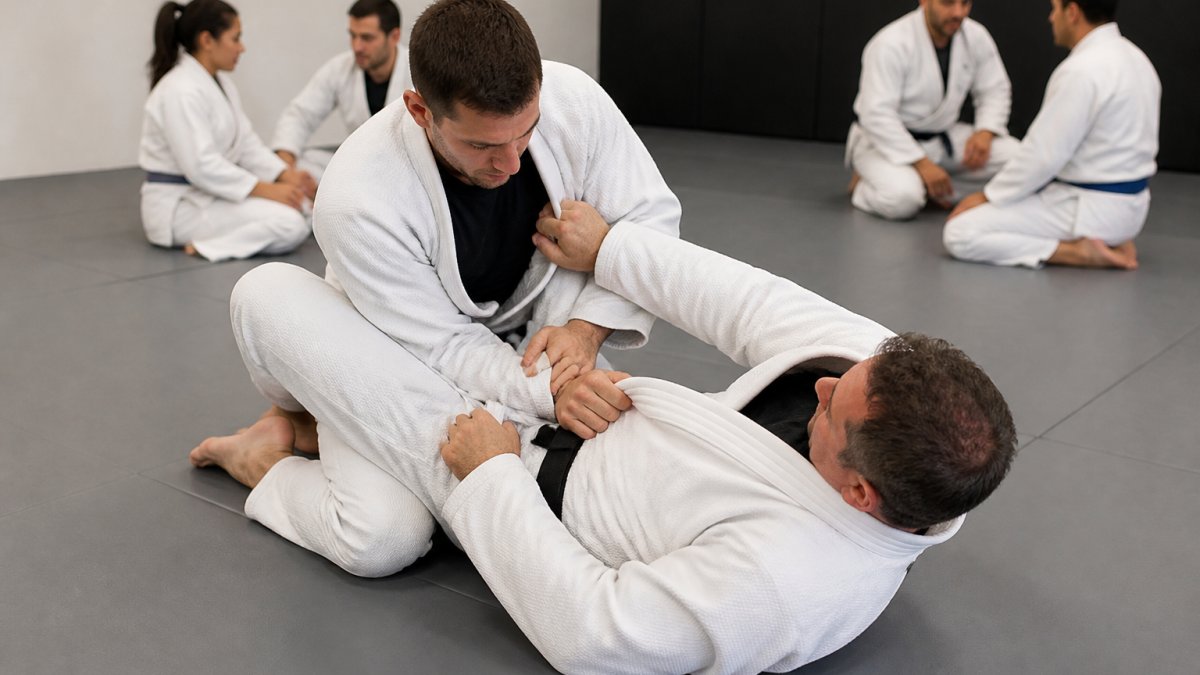
For your first class, wear fitted athletic clothing: shorts without pockets and a snug t-shirt. Most academies loan a gi to trial students, so you do not need to buy one before you know you will continue. The gi is the traditional heavy cotton uniform used in gi classes, while no-gi training uses rash guards and grappling shorts. Beginners generally start in the gi because grips slow the pace and make positions easier to feel. Once you understand the fundamentals, no-gi training sharpens your control without fabric to hold.
How Often to Train Jiu-Jitsu as a Beginner
| Frequency | Typical Outcome | Best For |
|---|---|---|
| 1 class/week | Slow progress, weak retention | Very busy schedules |
| 2-3 classes/week | Steady skill growth, good recovery | Most adult beginners |
| 4-5 classes/week | Fast progress, higher injury risk | Experienced or athletic adults |
Beginner Jiu Jitsu Class Cost and Trial Options
For current pricing, visit Evolve Jiu Jitsu & Muay Thai's website. The first class is free.
Evolve Jiu Jitsu & Muay Thai offers a complimentary first class. Visit the website for current pricing.
How to Choose a Beginner-Friendly Academy
At Evolve Jiu Jitsu & Muay Thai, classes are led by Checkmat black belt Todd Aimer in a supportive environment where beginners can learn and experienced practitioners can refine their skills.
Safety, Etiquette, and Staying Injury-Free
Most BJJ injuries come from ego, not technique, so tap early and tap often. Mat etiquette keeps training safe: bow or fist-bump before rolling, keep nails trimmed, and never crank a submission on a partner. Beginners should communicate with their partner about intensity and avoid live sparring until the coach says they are ready. Warming up properly and training within your recovery capacity prevents the overuse issues that sideline new students.
Fitness, Confidence, and Self-Defense Benefits for Adults
Evolve Jiu Jitsu & Muay Thai offers martial arts instruction for adults and children. Parents can learn more in our guide on the benefits of jiu jitsu for kids.
Book Your Free Trial Class at Evolve Jiu Jitsu & Muay Thai
At Evolve Jiu Jitsu & Muay Thai, your first class is free, and classes are led by Checkmat black belt Todd Aimer in a supportive environment where beginners can learn and experienced practitioners can refine their skills. Get started with Evolve Jiu Jitsu & Muay Thai by booking your free trial class.
Frequently Asked Questions
Do I need to be in shape before starting beginner jiu jitsu classes for adults?
Evolve Jiu Jitsu & Muay Thai offers instruction for adults, including beginners. The first class is free, so you can try a class before deciding whether to continue.
How much do beginner jiu jitsu classes typically cost?
Visit Evolve Jiu Jitsu & Muay Thai's website for current pricing. The first class is complimentary.
What should I wear to my first jiu-jitsu class?
For your first class, wear comfortable athletic shorts or leggings without zippers or pockets, plus a fitted t-shirt. Avoid loose clothing that can be grabbed, and remove jewelry, watches, and hair clips. Most academies loan a gi for your trial, so you do not need to buy one yet. Bring a water bottle, flip-flops for the mat edge, and a towel. Once you commit, the academy will tell you which gi and no-gi gear they require.
Is jiu-jitsu safe for adult beginners?
Jiu-jitsu is a grappling art with controlled contact, and beginner classes focus on drilling and positional work before live sparring. Most injuries come from going too hard too soon, so choose an academy where beginners are paired with experienced training partners and sparring is introduced gradually. Warm up properly, tap early when a submission is locked in, and communicate with your coach about any nagging pain. A structured, safety-focused program is far safer than jumping into open mat on day one.
How long does it take to learn the basics of jiu-jitsu?
Most adult beginners feel comfortable with fundamental positions, escapes, and a few submissions after three to six months of consistent training at two to three classes per week. Reaching blue belt typically takes one to three years depending on attendance, prior grappling experience, and your academy's standards. Progress is not linear, so focus on showing up regularly and tracking small improvements in technique rather than comparing yourself to training partners.
Can adults start jiu-jitsu with no martial arts experience?
Evolve Jiu Jitsu & Muay Thai offers instruction for adults, including beginners, in a supportive environment. The first class is free.