 Listicle
5 Key Differences Between Kids Jiu Jitsu vs Karate
Last Updated: November 15, 2026
Quick Summary
Kids jiu jitsu is a grappling art built on ground control and holds, while karate is a striking art built on punches, kicks, blocks, and forms. Neither style is better, but they suit very different kids, so match the art to your child's personality and comfort with contact.
- Kids jiu jitsu classes include no punches or kicks, only grips and body position.
- Karate sparring involves impact, while jiu jitsu sparring involves pressure and joint positioning.
- For most five-year-olds, jiu jitsu fits well because it teaches control without impact.
- Pick taekwondo for kicking and speed, karate for structure, and jiu jitsu for close problem-solving.
- Compare total annual cost, including grading fees, rather than the headline monthly price.
Table of Contents
- Kids Jiu Jitsu vs Karate: A Side-by-Side Comparison
- Karate or Jiu-Jitsu for a 5-Year-Old: What Fits Their Age
- Jiu-Jitsu vs. Karate vs. Taekwondo for Kids: Three Styles Compared
- Jiu-Jitsu for Kids with ADHD: Why Grappling Can Help Focus
- Kids Martial Arts Benefits: Confidence, Discipline, and Fitness
- How to Choose the Right Martial Art for Your Child
- Frequently Asked Questions
Kids Jiu Jitsu vs Karate: A Side-by-Side Comparison
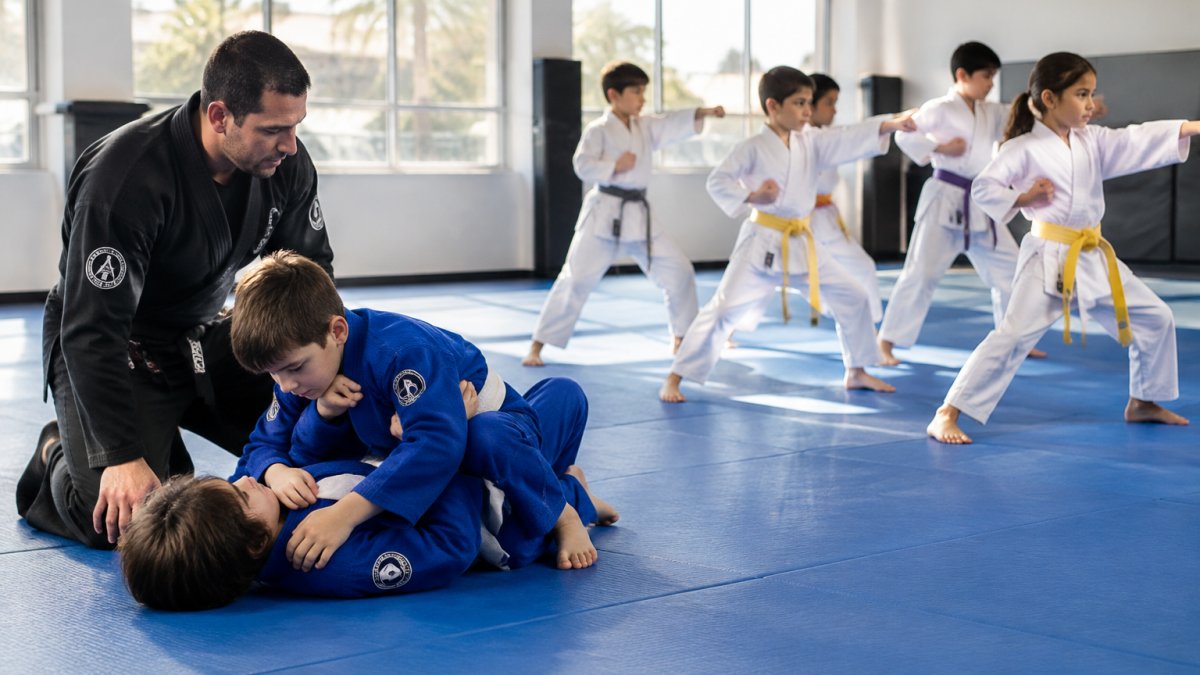
Kids jiu jitsu vs karate comes down to one core difference: jiu jitsu is a grappling art built on ground control and holds, while karate is a striking art built on punches, kicks, blocks, and forms. Neither style is better, but they suit very different kids. Below, we break down safety, age fit, and how to choose, so you can match the art to your child.
| Feature | Kids Jiu Jitsu | Kids Karate |
|---|---|---|
| Core skill | Grappling, ground control | Striking, kicks, forms |
| Contact style | Close, controlled holding | Distance-based striking |
| Sparring | Live rolling from early belts | Point sparring, later belts |
| Best for | Hands-on, calm kids | High-energy kids |
Grappling and Ground Control vs. Striking and Forms
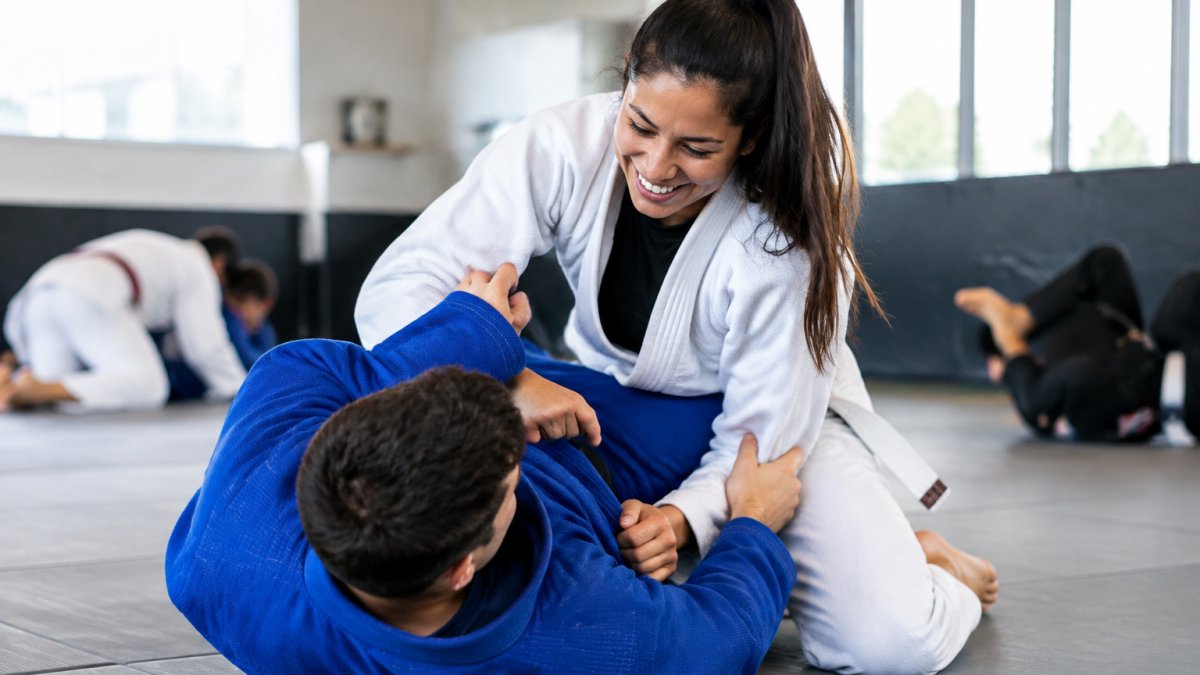
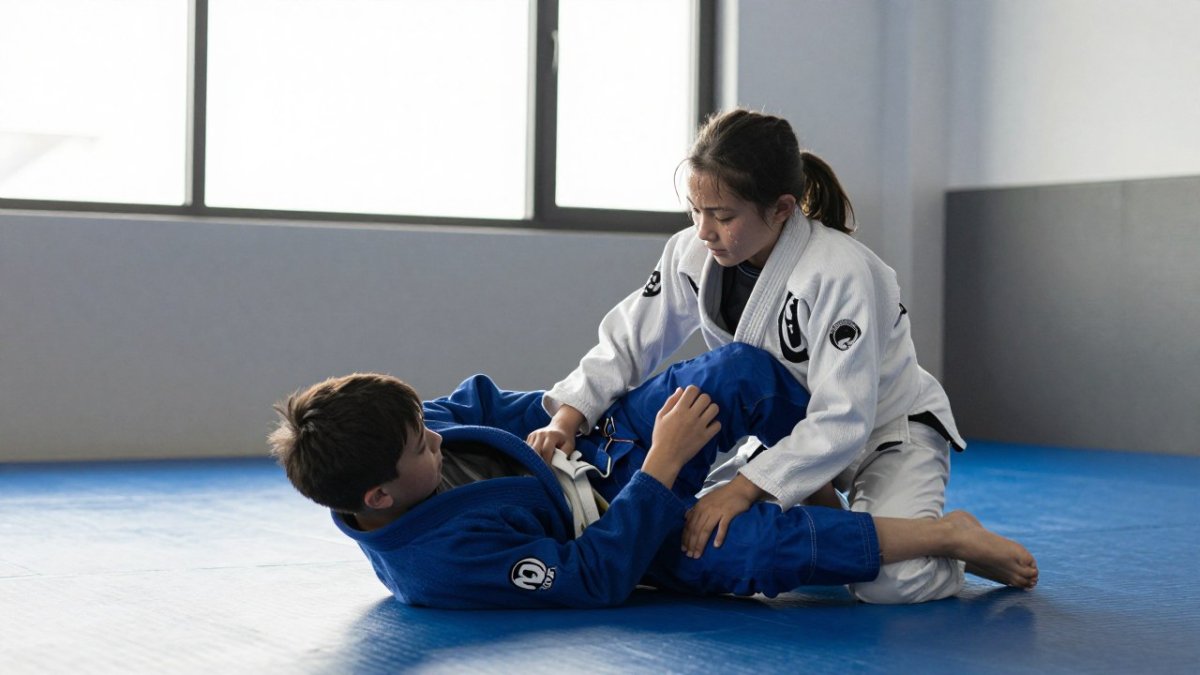
Brazilian jiu-jitsu teaches children to control a training partner on the ground using grips and body position. There are no punches or kicks in kids' BJJ classes. Karate works the opposite way: students learn punches, kicks, blocks, and forms, usually at striking distance. A common mistake parents make is assuming one art is "tougher." In practice, the difference is comfort with close physical contact versus comfort with fast, distance-based movement.
Safety and Injury Risk in Each Style
Safety is a common question, and both arts carry injury risk when sparring intensity is poorly managed. The practical difference: karate sparring involves impact, while jiu jitsu sparring involves pressure and joint positioning. For a closer look at how grappling holds up as self-defense, read is Brazilian jiu-jitsu good for self-defense. A well-run program matches contact to age and belt level, and that matters more than the style itself.
Karate or Jiu-Jitsu for a 5-Year-Old: What Fits Their Age
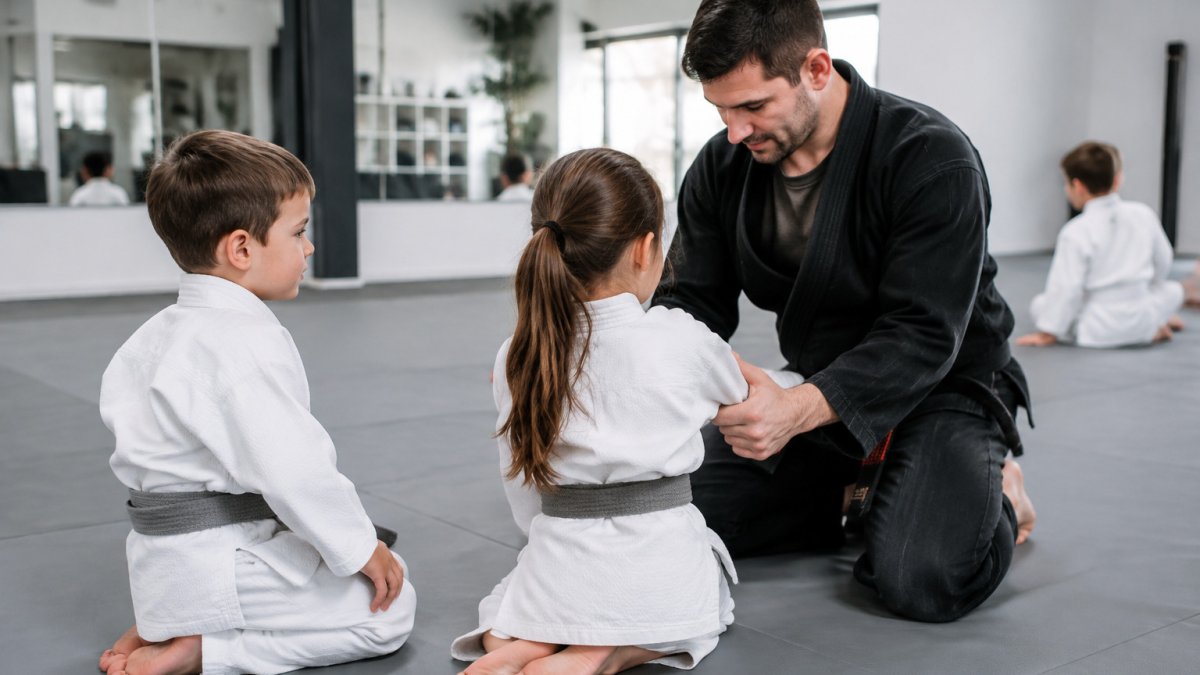
For most five-year-olds, jiu jitsu fits well because it teaches control and body awareness without impact, while karate suits kids who thrive on fast movement and clear routines. Both are age-appropriate when the class is built for young children. If you are unsure whether your child is ready at all, our guide on whether 4 is too young for martial arts walks through the readiness signs. Watch a trial class before deciding.
Jiu-Jitsu vs. Karate vs. Taekwondo for Kids: Three Styles Compared
Taekwondo adds a third option, and it leans hardest into kicking: high kicks, spinning kicks, and fast footwork. Karate blends punches, kicks, and forms with a strong emphasis on discipline and respect. Jiu jitsu stays on the ground. For a deeper head-to-head, see our breakdown of kids jiu jitsu vs Muay Thai. The short version: pick taekwondo for a child who loves kicking and speed, karate for structure and striking balance, and jiu jitsu for a child who prefers close, technical problem-solving.
Jiu-Jitsu for Kids with ADHD: Why Grappling Can Help Focus
Grappling gives kids with ADHD something many sports do not: constant physical feedback and a clear, immediate task. Holding a position or working a sweep requires attention in the moment. For practical detail on building focus through training, read how to build focus and discipline through martial arts.
Kids Martial Arts Benefits: Confidence, Discipline, and Fitness
Kids martial arts benefits show up in three places: confidence, discipline, and fitness. Belt progression gives children visible proof of effort, which builds confidence. Regular drilling and partner work teach respect and humility. Coordination, motor skills, and general fitness improve through consistent physical activity. For a closer look at how grappling specifically builds confidence, our article on the benefits of jiu jitsu for kids covers it in depth.
How to Choose the Right Martial Art for Your Child
Choosing comes down to three checks: your child's personality, the instructor, and the class structure. Most parents compare styles on paper, but the class your child actually attends matters more than the label on the door. Use this observation checklist when you visit a local school, and score each item yes, no, or unclear.
Instructor and ratios
- Does the instructor explain and demonstrate patiently with young kids, using short cues rather than long speeches?
- What is the instructor-to-child ratio during drilling, and does it tighten during sparring or rolling?
- Are assistant instructors or older students used for supervision, and are they trained for it?
- Does the instructor correct behavior calmly and consistently, without shaming or singling out children?
Safeguarding and contact rules
- Is there a written policy on contact, sparring, and injury reporting that parents can read?
- Is contact matched to age and belt level, with submissions or strikes restricted for beginners?
- Are protective equipment and mat condition checked before class?
- Can parents stay and watch, and is the viewing area positioned so you can see the mat clearly?
Class structure and teaching style
- Is the class organized into warm-up, instruction, drill, and game or sparring segments that young children can follow?
- Are class times workable for your family, and how many classes per week are expected for progression?
- Does the school offer a trial class or short trial period before a contract?
- Does your child leave the trial class smiling and asking to return?
Costs and commitment
Ask for the full picture before signing: monthly tuition, uniform and gear costs, belt or grading fees, testing frequency, and any tournament or travel expectations. A low monthly rate with frequent mandatory grading fees can cost more over a year than a higher flat rate, so compare total annual cost rather than the headline price.
Watch out: a school that pushes full sparring on brand-new young students, will not let you observe a class, or cannot produce a written contact and injury policy is a red flag, regardless of style. A trial class answers more than any article can.
The best way to settle kids jiu jitsu vs karate is to let your child step on the mat. At Evolve Jiu Jitsu & Muay Thai, our kids' classes start at age four and are led by Checkmat black belt Todd Aimer, with instruction built for beginners. Your first class is free, so your child can try grappling before you commit. Get started with Evolve Jiu Jitsu & Muay Thai and find the style that fits your child.
Frequently Asked Questions
Should I put my kid in karate or Jiu-Jitsu?
It depends on your child's personality and what you want them to gain. Kids jiu jitsu suits children who are comfortable with close contact and prefer learning through live grappling and ground control. Karate appeals to kids who like striking, punches, kicks, and structured forms. Visit a trial class in each style and watch how your child responds to the instructor and the other students before deciding.
What age should kids start Jiu-Jitsu?
Many academies, including Evolve Jiu Jitsu & Muay Thai, accept children as young as 4. At that age, classes focus on age-appropriate instruction, basic coordination, and motor skills rather than advanced technique. If your child can follow simple directions and is comfortable in a group setting, they are likely ready. A trial class is the best way to see how your 4- or 5-year-old handles the structure.
Is Jiu-Jitsu or karate better for a child with ADHD?
Jiu-Jitsu for kids with ADHD can be a strong fit because grappling demands constant physical engagement and close attention to a partner, which channels excess energy into a structured task. Karate also builds focus through forms and drills, but the standing format may allow more distraction. Look for a class with small groups and a patient instructor who gives frequent, clear feedback. Try a trial class in both styles to see which holds your child's attention.
Can kids learn Jiu-Jitsu and karate at the same time?
Yes, though most instructors suggest starting with one style for the first few months so your child can build confidence and basic skills without feeling overwhelmed. Once they are comfortable with the class structure and belt progression in one art, adding a second style can broaden their self-defense skills. Keep an eye on the weekly time commitment and cost before enrolling in both.