 blog
5 Benefits of Jiu Jitsu for Kids That Build Confidence
Last Updated: October 26, 2026
Quick Summary
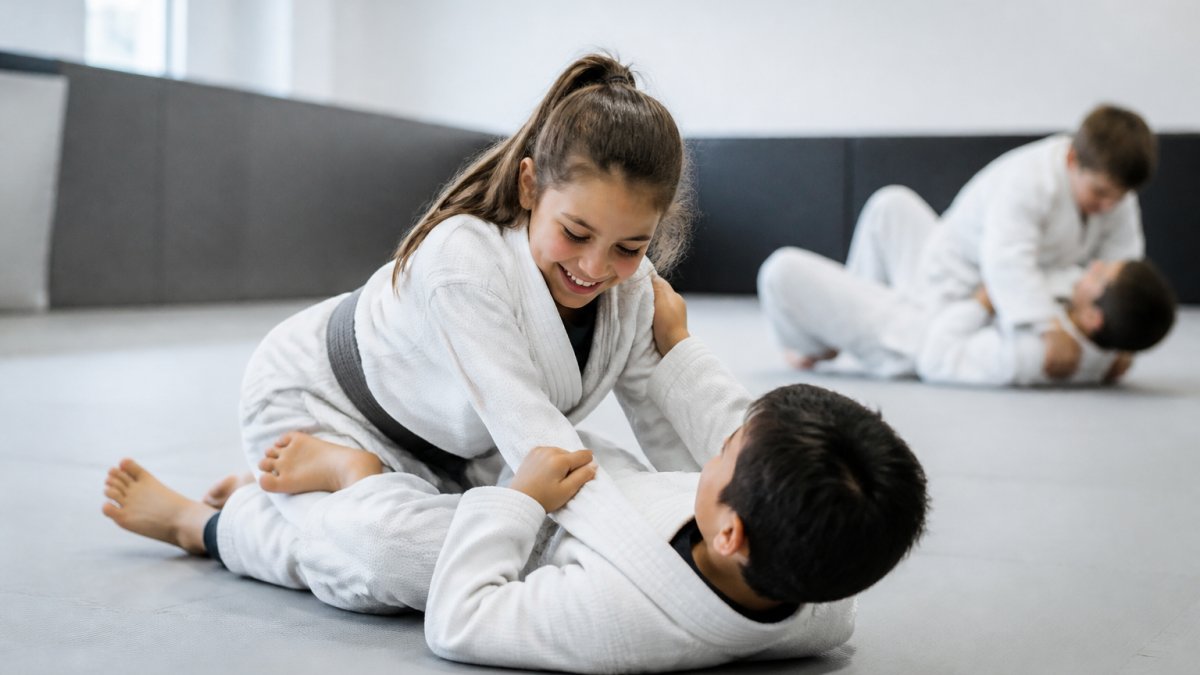
Jiu jitsu for kids is a grappling-based martial art that teaches children to control, escape, and stay safe without throwing a punch. Its five main benefits are physical fitness, confidence through self-defense, discipline and focus, social skills and friendships, and resilience that carries into school.
- The American Academy of Pediatrics recommends school-age children get at least 60 minutes of physical activity most days.
- Kids' classes should include water breaks every 15 to 20 minutes, and gis should be sized so they are not restrictive.
- Our classes are available for kids from age four, and readiness matters more than birthday.
- Two classes per week suits most kids and brings solid skill and fitness gains.
- Shy kids often take three to five classes to settle in, so do not pull a child out after one uncomfortable class.
Table of Contents
- Why Jiu Jitsu for Kids Is More Than a Sport
- Benefit 1: Physical Fitness and Healthy Habits That Stick
- Benefit 2: Confidence and Self-Esteem Through Self-Defense
- Benefit 3: Discipline, Focus, and Calm Under Pressure
- Benefit 4: Social Skills, Teamwork, and Friendships on the Mat
- Benefit 5: Resilience and Problem-Solving That Carry Into School
- Is Jiu Jitsu Safe for Kids?
- What Is the Best Age to Start Jiu Jitsu?
- How Often Should Kids Train Jiu Jitsu?
- What to Expect in a Kids' Jiu-Jitsu Class
- How Parents Can Support Progress Without Adding Pressure
- How to Choose a Safe, Child-Friendly Program
- Frequently Asked Questions
Why Jiu Jitsu for Kids Is More Than a Sport
Jiu jitsu for kids is a grappling-based martial art that teaches children to control, escape, and stay safe without throwing a punch.
Here are five potential benefits of jiu jitsu for kids, plus what to consider when choosing a program.
Benefit 1: Physical Fitness and Healthy Habits That Stick
Jiu jitsu involves physical activity. Kids push, pull, roll, and scramble.
The American Academy of Pediatrics recommends that school-age children get at least 60 minutes of physical activity most days (Energy Out: Daily Physical Activity Recommendations).
Benefit 2: Confidence and Self-Esteem Through Self-Defense
Confidence from self-defense is specific, not bravado, the quiet knowledge that you can protect your space if you need to.
Benefit 3: Discipline, Focus, and Calm Under Pressure
That calm transfers: many parents say their child handles homework frustration and test nerves better after a few months.
Benefit 4: Social Skills, Teamwork, and Friendships on the Mat
Respect is built into the culture: kids learn to listen, take feedback, and shake hands after every round, win or lose.
Benefit 5: Resilience and Problem-Solving That Carry Into School
Stripes and belts give kids a visible ladder to climb, turning patience and perseverance into habits rather than lectures.
Is Jiu Jitsu Safe for Kids?
The more useful question is "what makes a program safe?" Here is what separates a well-run kids' class from a risky one.
The real risks, and how good programs manage them
- Joint strain from uncontrolled submissions. Kids should be taught to apply locks and chokes slowly and to tap early. A good instructor stops a round the moment a submission is locked in, not after a child fights it.
- Collisions during takedowns and scrambles. Beginners should drill takedowns at walking speed on padded mats before any live resistance. Sprawling and falling safely are taught as skills, not assumed.
- Overheating and dehydration. Kids' classes should include water breaks every 15 to 20 minutes, and gis should be sized so they are not restrictive.
- Mat hygiene. Ringworm and staph are the most common gym-acquired issues in grappling. Clean mats, shoes off the mat, and kids washing hands and showering after class reduce risk sharply.
- Mismatched partners. A 60-pound seven-year-old should not be drilling live with a 130-pound twelve-year-old. Age and size grouping matters more than belt color.
What supervised grappling is, and is not
Supervised grappling is not fighting. In a well-run class, sparring is a structured drill with rules: no strikes, no slams, controlled speed, and an instructor watching every pair. The goal is practicing technique against resistance, not winning. Parents should see kids tapping, resetting, and helping each other up, not scrapping.
Questions to ask before enrolling
- What is your instructor-to-student ratio during sparring?
- How do you teach a new student to tap, and what happens if a partner does not stop?
- Are instructors certified in CPR and first aid?
- What is your policy on head contact and slams?
- How do you group kids by age, size, and experience?
A free trial class is available.
What Is the Best Age to Start Jiu Jitsu?
There is no single best age. Our classes are available for kids from age four. Readiness matters more than birthday.
Readiness signs by age band
- Ages 4-5: Can follow a two-step instruction ("pick up the ball and bring it here"), can take turns in a game, and enjoys physical play with other kids.
- Ages 6-8: Can stay on task for 30 to 45 minutes, understands the idea of practice, and can lose a game without quitting.
- Ages 9-12: Can think about strategy, ask questions, and self-correct.
- Ages 13+: Teens do well in adult beginner or teen-specific classes. The main adjustment is ego, teens often need a few weeks to get comfortable losing rounds to smaller, more experienced training partners.
When temperament matters more than age
A shy or cautious child may need a smaller class, a patient instructor, and a parent visible on the sideline for the first few sessions. A high-energy child may need enough movement and structured sparring to stay engaged. Neither child is "not ready", they just need a different on-ramp. Shy kids often take three to five classes to settle in, then become some of the most consistent students; the mistake parents make is pulling a child out after one uncomfortable class.
Children with different support needs
Many gyms now run adaptive or inclusive kids' classes for children with autism, ADHD, sensory processing differences, or physical disabilities. Jiu jitsu's structure, predictable warm-ups, clear rules, one-on-one drilling, can fit kids who struggle in less structured sports. Ask any program directly whether they have experience with your child's needs, and observe a class before committing.
The bottom line
Start when your child can follow directions, handle small setbacks, and wants to try. That may be four for one kid and ten for another. Both are fine. The kids who stick with it are rarely the ones who started earliest, they are the ones whose first few months were structured, supervised, and fun.
How Often Should Kids Train Jiu Jitsu?
| Training Frequency | Best For | What to Expect |
|---|---|---|
| 1 class per week | Trying it out, busy schedules | Slow progress, habit building |
| 2 classes per week | Most kids, steady growth | Solid skill and fitness gains |
| 3+ classes per week | Competitive kids, teens | Faster progress, needs recovery time |
What to Expect in a Kids' Jiu-Jitsu Class
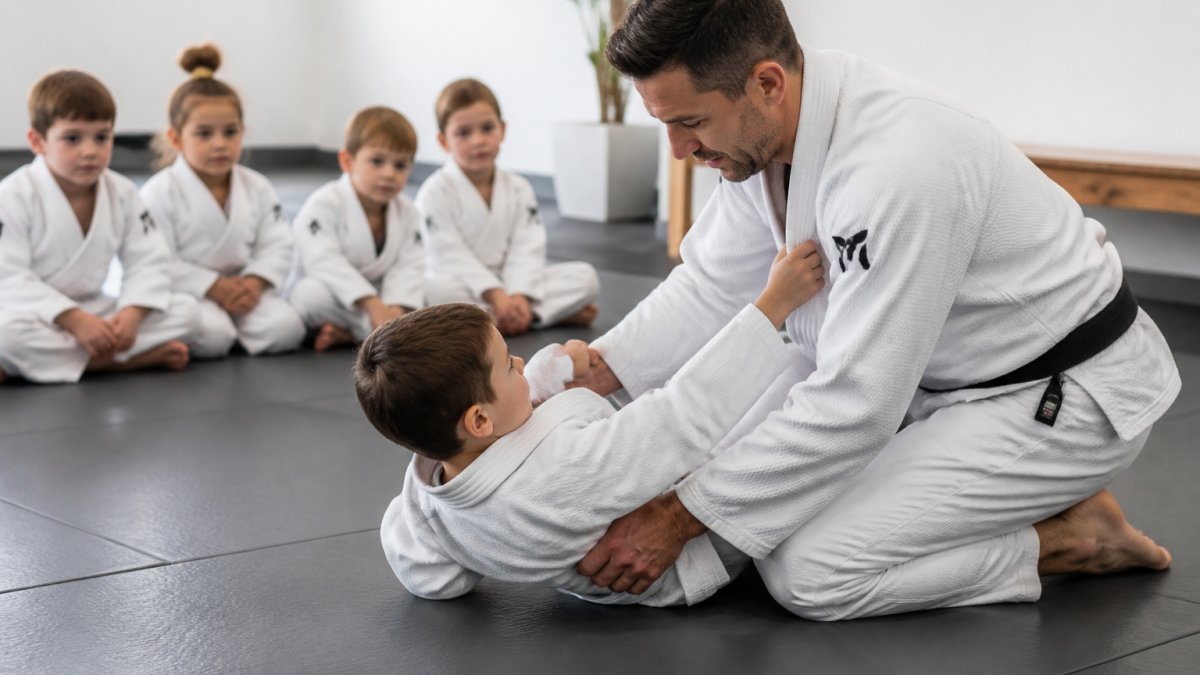
Here is the usual structure:
- Warm-up games that build coordination
- Technique demonstration by the instructor
- Partner drilling at controlled speed
- Supervised positional sparring for older kids
- Cool-down and a short talk on respect or effort
How Parents Can Support Progress Without Adding Pressure
Ask open questions after class. "What was the hardest part today?" works better than "Did you win?"
How to Choose a Safe, Child-Friendly Program
Look for three things: patient instructors, clear safety rules, and a beginner-friendly culture. A free trial class tells you more than any brochure.
At Evolve Jiu Jitsu & Muay Thai, classes are available for kids from age four under the guidance of Checkmat black belt Todd Aimer. The environment is supportive, and your first class is free.
Use this checklist when you visit any gym:
- Instructors greet your child by name
- Safety rules are explained in the first five minutes
- New students are paired with experienced partners
- The instructor corrects kids calmly, not harshly
- Parents are welcome to watch
- The mat and facility are clean
- Class sizes allow real attention per child
Frequently Asked Questions
What are the main benefits of jiu-jitsu for kids?
Jiu-jitsu for kids develops physical fitness, confidence, discipline, social skills, and resilience. Children build strength, endurance, and coordination while learning self-defense in a controlled setting. The structure of class teaches focus and respect, and working with training partners builds teamwork and friendships. Because progress comes from consistent practice rather than raw athletic talent, kids learn perseverance and problem-solving they can apply at school and home.
Is Brazilian jiu-jitsu safe for children?
At Evolve Jiu Jitsu & Muay Thai, classes are available for kids from age four in a supportive environment under the guidance of Checkmat black belt Todd Aimer.
What is the best age to start jiu-jitsu?
Classes are available for kids from age four. A free first class is available.
How often should kids train jiu-jitsu?
Most children do well with one to two classes per week to start. That pace builds familiarity without overwhelming a young beginner or crowding the family schedule. As kids settle in and show interest, two to three sessions per week can speed skill development and fitness gains. Consistency matters more than volume, so pick a schedule your family can keep. Ask the gym about flexible class times if work or school schedules vary.
The hardest part is walking through the door the first time. We make that easy: your child's first class at Evolve Jiu Jitsu & Muay Thai is free, taught by a Checkmat black belt, and open to kids as young as four. Get started with Evolve Jiu Jitsu & Muay Thai and watch confidence build one class at a time.
