 How-to
How to Start Brazilian Jiu Jitsu: Steps for Beginners
Last Updated: November 10, 2026
Quick Summary
Starting Brazilian Jiu Jitsu begins with choosing a school that fits your goals, then trying a beginner class before you commit. Expect a warm-up, technique instruction, drilling, and optional rolling, and train two to three classes per week to build skill without burnout.
- Visit in person and watch a beginner class before you enroll at any academy.
- A typical beginner class includes a 10-15 minute warm-up and a 20-30 minute technique block.
- Wear a t-shirt and shorts or leggings with no zippers or pockets to your first class.
- Two to three classes per week is the sweet spot for most beginners.
- Belt promotions reflect attendance, skill, and attitude rather than a fixed timeline.
Table of Contents
- Step 1: Choose a Brazilian Jiu Jitsu School That Fits Your Goals
- Step 2: What to Expect in Your First Jiu Jitsu Class
- Step 3: What to Wear to a BJJ Class and What to Bring
- Step 4: How Often to Train Brazilian Jiu Jitsu as a Beginner
- Step 5: Brazilian Jiu Jitsu Belt Progression and Your First Milestones
- Book Your Free First Class at Evolve Jiu Jitsu & Muay Thai
- Frequently Asked Questions
Step 1: Choose a Brazilian Jiu Jitsu School That Fits Your Goals
Starting Brazilian Jiu Jitsu begins with one decision: which academy you walk into. The right school shapes how fast you learn, how safe you stay, and whether you quit in month two or stay for years.
Before you commit, visit in person. Watch a beginner class, not just an advanced one. You want to see how the instructor treats the least experienced student in the room.
Questions to Ask Before You Enroll
Bring this checklist to every academy you visit:
- Who teaches the beginner classes, and what is their rank and lineage?
- How many students per instructor during a typical class?
- Is there a structured curriculum, or do students just drill random moves?
Ask about the instructor's teaching style, too. A black belt who cannot explain a move to a nervous adult is not the right teacher for you. Look for someone patient, detail-oriented, and clear. A simple test: ask the instructor to walk you through one basic escape. If they can break it into two or three steps you could repeat back, that is a good sign.
How to Judge Instruction Quality in One Visit
You do not need years of experience to evaluate a school. Watch for these signals during a single beginner class:
- Safety first: the instructor explains tapping early, pairs beginners with experienced partners, and stops rough rounds before they escalate.
- Structure: the class follows a plan, and the technique connects to what students learned the week before.
- Corrections: the coach gives specific feedback ("keep your elbow tight") rather than vague praise.
Watch out: a school that pressures you to sign a long contract before you have taken a single class is a red flag, no matter how impressive the instructor's competition record looks.
If you are weighing whether adult beginner classes are actually worth the time and money, it helps to read an honest breakdown of whether beginner jiu jitsu classes for adults are worth it. And if self-defense is your main reason for starting, check whether BJJ fits that goal in this look at whether Brazilian Jiu-Jitsu is good for self-defense.
Step 2: What to Expect in Your First Jiu Jitsu Class
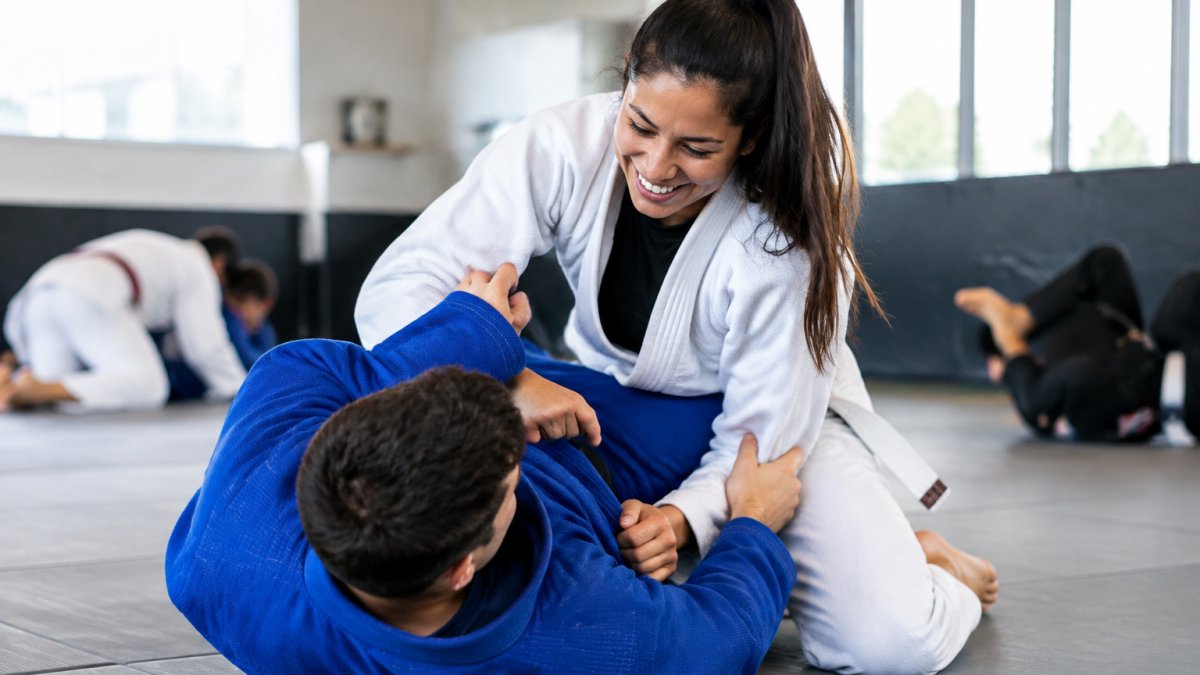
Your first class follows a predictable rhythm at most schools: a warm-up, technique instruction, drilling, and then live training for those ready for it. You will not be thrown into sparring on day one at a good academy. Expect to feel clumsy, and expect that to be completely normal.
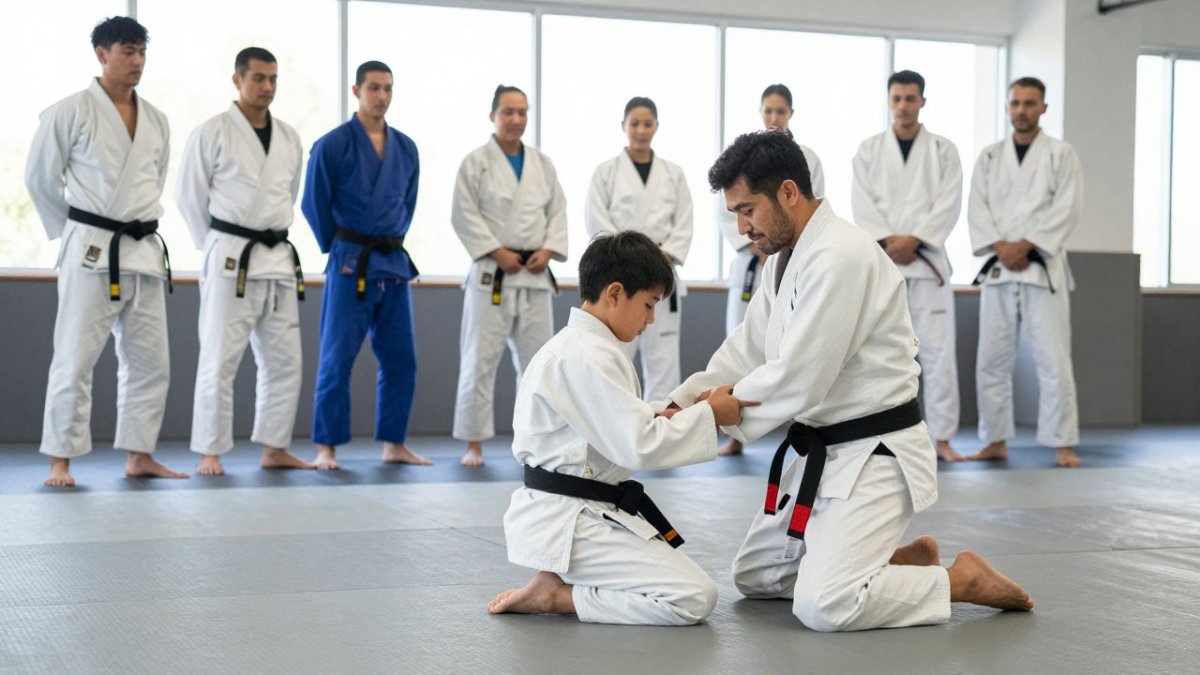
Here is what a typical beginner class looks like:
- Warm-up (10-15 minutes): light jogging, shrimping, breakfalls, and mobility work
- Technique block (20-30 minutes): the instructor demonstrates one or two moves, then you drill them with a partner
- Positional drilling (10-15 minutes): repeating the technique against light resistance
- Live training or rolling (optional for beginners): controlled sparring, often starting from a specific position
Warm-Up, Technique, and Rolling Explained
Rolling is the term for live sparring on the ground. It is controlled, not a fight.
The moves you learn first are the ones everything else builds on. Expect to spend your early weeks on escapes, guard retention, and basic submissions, not flashy techniques.
Want a fuller walkthrough before you go? Read what to expect in your first jiu jitsu class for a detailed, step-by-step preview.
Typical beginner BJJ class segments by duration
Step 3: What to Wear to a BJJ Class and What to Bring
Wear comfortable athletic clothing for your first class: a t-shirt and shorts or leggings with no zippers or pockets. Most schools loan a gi to true beginners. Call ahead and ask, so you are not caught off guard.
What to bring:
- Water bottle
- Flip-flops for the walk to and from the mat
- A towel
Hygiene matters in grappling. Wash your gear after every session, keep your skin clean, and never train with an open cut. If you decide to continue, you will eventually want your own gi, a rash guard, and a mouthguard.
Step 4: How Often to Train Brazilian Jiu Jitsu as a Beginner
Two to three classes per week is the sweet spot for most beginners. That frequency builds muscle memory without burning you out or risking overuse injuries. One class a week feels slow; five classes a week from day one often leads to fatigue and frustration.
A common mistake is going all-in for two weeks and then disappearing. Steady beats intense. Pick a schedule you can actually keep for six months, and protect it.
Your body needs recovery, especially early on. Soreness in the first month is normal. Sharp joint pain is not, so speak up and scale back when something feels wrong.
Here is how training frequency plays out for most beginners.
| Training frequency | What it means | Note |
|---|---|---|
| Two to three classes per week | Sweet spot for most beginners | Builds muscle memory without burnout |
| One class a week | Feels slow | Too little to build momentum |
| Five classes a week from day one | Often leads to fatigue and frustration | Not recommended at the start |
| Six months | Schedule you can actually keep | Steady beats intense |
Step 5: Brazilian Jiu Jitsu Belt Progression and Your First Milestones
Brazilian Jiu Jitsu belt progression starts at white belt and moves through blue, purple, brown, and black. Promotions are not on a fixed timeline.
Your first real milestone is not a belt at all. It is learning to survive on the bottom without panicking. Then comes escaping bad positions, then controlling a partner, then finishing a submission in live training.
A Beginner's Skill Roadmap
Most structured beginner programs follow a progression like this:
- Survival and defense: learn to protect your neck and arms, keep calm under pressure, and recognize when to tap.
- Escapes: practice getting out of mount, side control, and back control before you learn to attack from them.
- Guard basics: learn to keep your opponent at a safe distance with your legs and to recover guard when you lose it.
- Top control: learn to hold mount and side control with weight distribution and base, not strength.
- Submissions: learn a small set of high-percentage finishes, usually a choke and an arm lock, from positions you can already control.
- Live rolling: apply the above in controlled sparring, starting from specific positions before full rounds.
Core Positions You Will Learn First
These are the foundational positions every beginner works through:
- Mount: you on top, opponent pinned beneath you
- Guard: you on your back with your legs between you and your opponent
- Side control: you pinning your opponent from the side
Learn the escapes from each before you chase submissions. Defense first is the fastest path to progress. A common pattern among beginners who improve quickly is that they spend their first months asking "how do I get out of here?" rather than "how do I finish this?"
How Promotions Actually Work
Most schools evaluate students on a mix of class attendance, technical knowledge, performance in live training, and attitude.
Watch out: comparing your belt timeline to a training partner's is a fast route to frustration.
If you want a fuller picture of the beginner path before you step on the mat, read what to expect in your first jiu jitsu class for a detailed, step-by-step preview.
Book Your Free First Class at Evolve Jiu Jitsu & Muay Thai
The hardest step is walking through the door. Once you are on the mat, the rest follows.
Our classes are led by Checkmat black belt Todd Aimer, and we welcome students of every age and experience level.
We aim to provide a supportive and professional environment where beginners can learn. Get started with Evolve Jiu Jitsu & Muay Thai and take your first class this week.
Frequently Asked Questions
What should I expect in my first Brazilian Jiu Jitsu class?
Most beginner classes follow a set rhythm: a warm-up, then technique instruction where the instructor demonstrates a move and you drill it with a partner, then controlled rounds of rolling or positional sparring. You will not be thrown into full-intensity sparring on day one. The free first class lets you see the format before committing. Wear comfortable athletic clothing, bring water, and arrive early to meet the instructor.
How often should a beginner train Brazilian Jiu Jitsu?
Two to three sessions per week is a realistic starting point for most adults. That frequency gives you enough repetition to retain technique without overwhelming your recovery, especially in the first month when your body is adjusting to new movements. Students training for competition often move to four or five sessions. Consistency matters more than volume: three classes every week for six months beats six classes in one week followed by a month off.
What do I need to buy before my first BJJ class?
You need very little to start. Athletic shorts or leggings and a fitted t-shirt work fine for your first few sessions, and most schools loan a gi if the class requires one. Add a water bottle, flip-flops for the walk to the mat, and nail clippers. Once you commit, buy a properly fitted gi, a mouthguard, and rash guards. Keep your gear washed after every session, keep fingernails and toenails short, and never walk onto the mat in street shoes.
How long does it take to earn a blue belt in Brazilian Jiu Jitsu?
Belt progression in Brazilian Jiu Jitsu is not standardized across schools, but most adult students spend one to two years at white belt before earning blue. Progress depends on mat time, how consistently you drill, and your instructor's assessment of your technique and composure under pressure. Stripes mark smaller milestones along the way. Instead of chasing a timeline, track what you can now do that you could not do three months ago: escapes, sweeps, and positional control.